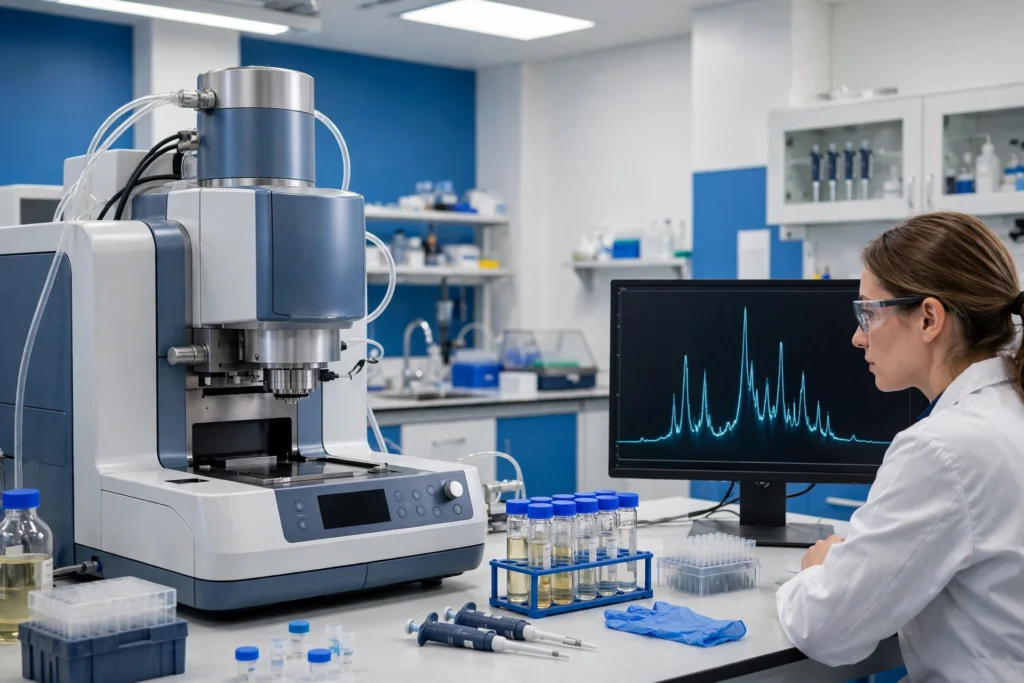
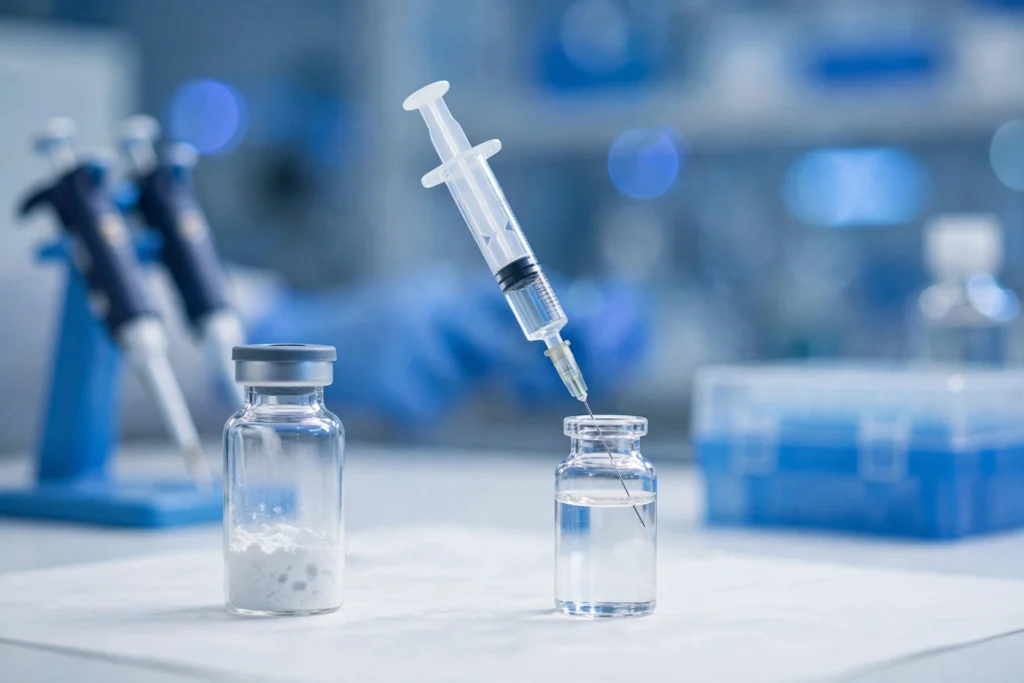
Ipamorelin Peptide Research: The First Selective GH Secretagogue Ipamorelin peptide research is the study of a synthetic pentapeptide that earned a specific distinction in the growth hormone literature: selectivity. Earlier growth hormone-releasing peptides could raise growth hormone (GH), but they also raised cortisol, prolactin, or other pituitary hormones, muddying any experiment trying to isolate a […]
CJC-1295 Peptide Research: DAC vs No-DAC, GH and IGF-1 Studies CJC-1295 peptide research is the study of a synthetic growth hormone-releasing hormone (GHRH) analog designed to last far longer than the natural hormone. Native GHRH is cleared in minutes, making it a poor tool for sustained signaling questions. CJC-1295 peptide research solved that in two […]
Peptide Mass Spectrometry: How MS Confirms Identity on a COA Peptide mass spectrometry weighs individual molecules with extraordinary precision and compares the result against the mass predicted from the amino acid sequence. A peptide can pass an HPLC purity test at 99% and still be the wrong compound entirely, because chromatography measures uniformity, not identity. […]
Peptide HPLC Purity Testing: How to Read a Chromatogram Like a Researcher Open any credible research-peptide certificate of analysis and the first thing you’ll see is the HPLC section: a purity number, usually 95% or higher, and a chromatogram full of peaks. For most researchers, that number is the whole story. It shouldn’t be. Peptide […]
Every peptide that shows up in a research catalog — BPC-157, TB-500, GHK-Cu, or any of the hundreds of compounds laboratories order for in-vitro work — began as an idea on paper: a specific sequence of amino acids. Turning that sequence into a physical vial of material is a manufacturing problem chemists have been refining […]
GHK-Cu peptide research is one of the longest-running stories in peptide science — and one of the most misunderstood. The copper tripeptide turns up in glossy serums, in wound-healing studies, and increasingly in longevity discussions that outpace the evidence. Strip away the marketing, though, and you’re left with a genuinely interesting molecule: a small, naturally […]
Reconstitution is the first hands-on step between a lyophilized peptide vial and a usable research solution — and it’s where a surprising share of lab errors originate. Learning how to reconstitute peptides correctly protects the compound’s integrity, keeps results reproducible across batches, and ensures the material behaves the way its Certificate of Analysis says it […]
Few compounds in tb-500 peptide research are more widely discussed and more poorly defined than TB-500. Depending on which supplier’s page or forum thread you land on, the same label is said to describe a seven-amino-acid fragment, a 43-amino-acid protein, a “Wolverine” repair stack partner, and a banned substance in professional sport. Some of that […]
Few compounds in bpc-157 peptide research carry as much reputation — and as much misunderstanding — as Body Protection Compound-157. For three decades it has been one of the most discussed “peps” in research circles, cited in more than fifty published studies and associated in lab settings with effects spanning tendon repair, gut protection, and […]
MOTS-c Peptide Research: What the Mitochondrial-Derived Peptide Actually Shows MOTS-c peptide research begins with one of the more startling discoveries in modern biology: inside the mitochondrial genome — in a stretch of DNA that textbook biochemistry insisted was non-coding — scientists found instructions for a functional, circulating signaling peptide. Since Lee and colleagues at the […]
Get 10% Off Your First Order
Join the Apex list for research articles, compound guides, and subscriber-only offers. Enter your email and your 10% code appears instantly.
You’re in!
Use code Apex10 at checkout for 10% off.
Age Requirement
You must be 21 years or older to enter this website.
Apex Bio Industries is intended only for adults aged 21 and older. Individuals under the age of 21 are not permitted to access, purchase, or interact with products or content available through this website.
Research Use Only
All products offered by Apex Bio Industries are intended strictly for Research Use Only (RUO) purposes. These products are provided exclusively for laboratory research, scientific investigation, and educational purposes by qualified researchers and institutions. Products are not intended for human consumption, clinical use, medical treatment, diagnosis, prevention, or cure of any disease or condition. Apex Bio Industries does not provide medical advice, treatment recommendations, or instructions for personal use. Customers are responsible for ensuring that their purchase, handling, storage, and use of products comply with applicable laws, regulations, and institutional guidelines.
Please check the box above to confirm you are 21 years or older.